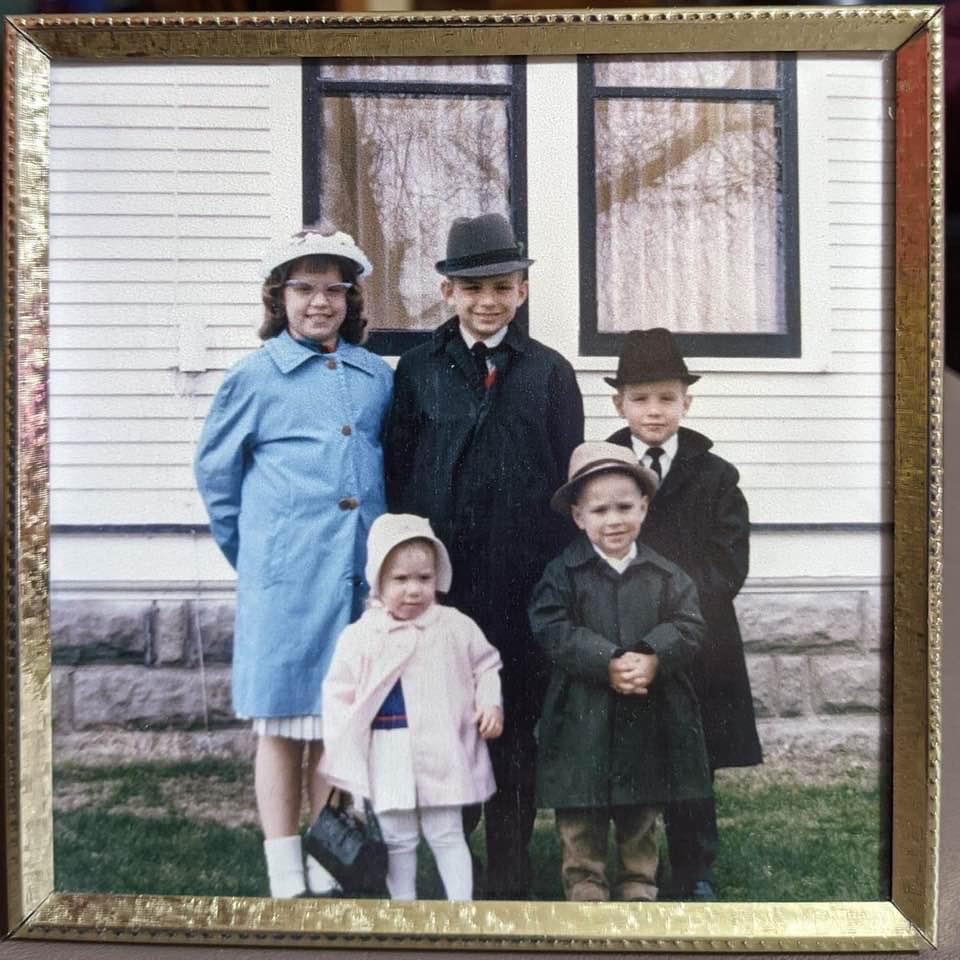
I used to be so embarrassed by this photo. Now I see it as a perfect snapshot in time. I would have been 9 and a half. I was desperate to get glasses when I was in third grade and I got them. I stopped wearing them in high school when I tired of glasses and my vision was not bad enough to get contacts. I didn’t need them again until I was nearly 40. I feel kind of bad about that now because they were an unnecessary expense for my parents.
This picture is n the side yard of the Grandpa Bill’s farm house. After Grandpa Bill died when I was a freshman in college, my parents and younger siblings moved to the farm so my dad could become a farmer. My mom absolutely did not want to move back to the farm that she grew up on. In retrospect I am not sure how much my dad wanted to do it either but when my grandfather asked, my dad agreed. If he hadn’t the farm would likely have been sold as it was owned by his 4 daughters and only one of them would have wanted to keep it.
I selfishly was glad they kept the farm in the family. It provided many wonderful summers for my son and nieces and nephews. While for me it was “farm camp” with laundry, gardening, canning etc. For the next generation it was mainly fun. The farm is no longer in the family as there was no one interested in the farm life.
We arrive in Ensenada later this afternoon and leave later today. We have one more sea day before we arrive back in SF Tuesday morning. We will head to the airport at 9 AM and if the travels gods are in a good mood we may be able to catch an earlier flight home. Our current flight is at 4 PM which gets us home at midnight. It would be wonderful to get home earlier.
Freddie is the person who takes very good care of us in our cabin. With the electronic fobs, they can see if we are in our cabins or not so there is none of the annoying knocking from housekeeping trying to figure out if it is a good time to clean.
Yesterday morning, Freddie knocked which was unusual as we generally see him in the halls. He had a Princess shopping bag with a gift for Carol. He had requested it at the beginning of the cruise, but apparently it took a while for the process to work. Carol was napping on the deck and he did not want to waken her – so I got to see the joy on her face when she found a Princess Bear – Stan in the bag.
As we left for lunch, Freddie got his well deserved hug!!!! Carol wants his address so he can make a Teddy Bear and send to him.
Grandma Iona and Grandpa Bill just after I was born in 1955
I asked Carol to talk about her father today. “He was a wonderful man. A good Christian. He planned ahead so he always had things he needed. He was also generous.
A story she recalls is that Grandpa had was running out of fuses so he went to town and stocked up. He put them in the machine shed where he kept such things. A couple of days later he needed a fuse. When he went to get one, there were none. Now I know his brother Herman liked to play jokes on Grandpa so I thought the story was going to go that direction. Not so.
There apparently was still a fuse so he could replace what he needed but he had not idea what happened to the new ones. A couple of days later he found twice as many new fuses in the machine shed as he had bought in the first place. Apparently it was well known that Grandpa didn’t mind neighbors borrowing things. And on this occasion whomever borrowed replaced twice as many as he borrowed.
“He was well liked and had a good sense of humor.” He and his brother played tricks on each other. Carol couldn’t recall anything specific pranks except one that Uncle Herman played on city slicker, Bob was raised outside of Detroit and he married my Aunt Norma.
Bob liked to help with farm work. One day the asked him to run the weed mower but explained that the way to go slower was to squeeze the handle bar harder which of course was the opposite of what he needed to do. They had great fun watching Bob running after the weed mower.
Grandpa Bill liked to quote Bible verses and was often a sounding board for the student preachers that were rotating through the small rural churches. Carol recalls more than one who decided preaching was not for them
“He was very understanding. He would give shirt off his back.” (or the fuses out of the machine shed
He was the affectionate parent – always free with hugs. He was thrilled to have grandson’s after having 4 daughters. Carol reassured me he was proud of his granddaughters as well.
While he was a good farmer, and kind to his animals, he had wanted to be a doctor but hid father would not allow him to stay in school past 8th grade. I remember hearing this. I suppose he must have said it to me directly as some point but I do not have a specific memory of it. I do remember that he always had a home remedy for almost every ailment and we rarely needed to go to physicians. We put silk ribbons around our necks for croup; used Vick’s vapor rub and hot flannel on our chests for coughs. We rubbed butter on bumps and vanilla on burns (and this really works). We used peppermint fr upset stomachs. We went to chiropractors and did reflexology (although we called it having our feet worked on). We rolled our feet on the old glass Pepsi bottles that had curved ridges on them. If you know what I am talking about, you are dating yourself.
When I went to medical school I was conditioned to NOT thinking that Western medicine had all of the answers. This was before I was aware of the terminology alternative medicine – now termed complementary.
My Grandpa’s medical skills were best demonstrated when I sat in a bucket of boiling water while were were dressing chickens when I was 5 or so. Just to be clear, the was not because of my own clumsiness. I recall my Grandpa had be out of the water and my short stripped off of me with seconds. I don’t know what all was applied to my backside over the next week but I remember I got to lay on my stomach in his bed for a week and I had no scarring. My teenage cousin who was taunting me with a dead chicken got in a fair amount of trouble for being the instigator of that.
When I went to medical school I was conditioned to NOT thinking that Western medicine had all of the answers. This was before I was aware of the terminology alternative medicine – now termed complementary. My pragmatic approach was that if we needed modern medicine to survive, we would have been extinct as a species a long time ago.
The answer is yes if you are on a cruise with mostly retirees and have me at your table. I do not every force it into a conversation but when there is a natural transition, I take it. People are very interested and often have questions that I am able to answer. it is fun.
I wonder if I could talk cruise lines into doing a bladder health and menopause lecture every day in one of the small salons. Perhaps that is how I could do my Mediterranean cruise for free.
There is not a lot of activity on our sea days. We often sleep/read late. Most mornings we have had breakfast in the room. When you don’t really taste it, it doesn’t really matter if you have variety. We get out or a sit down lunch, usually with different people and then play cards with Natalie and CJ from Fort Worth. Then it is time to rest a bit before dinner.
Family members took Carol shopping for clothes before the cruise so I am trying to get pictures of the outfits when she wears them. She is very much enjoying having new clothes. She has had little need for new clothes since she retired 20 years ago.
Carol is getting much better at spontaneously smiling for the pictures without me harassing her.
I found out that our really thin, fine hair is courtesy of Iona, Carol’s mother. My hair was pretty reasonable when I was younger, but now it is so insubstantial that keeping it short and using LOTS of product is the only way to manage it. Carol would be better off with a similar style, but she is used to bangs and does not want to see her own hearing aids so this is one battle I am not going to win.
I have often thought about writing a book, a combination of a memoir and opinion about health care in general with emphasis on women. It would not be a regurgitation of the ever-changing evidence but rather putting anatomy, physiology and evidence in context.
I truly have a love/hate relationship with evidence based practice of medicine in general and in particular the clinical algorithms that are used as recipe cards rather than guidance to make good decisions for the individual patient in front of you. Over the past decade, I have had the opportunity to be at the beside of 5 family members who were in the hospital – 4 of the experiences are very illustrative of poor care – 2 with very bad outcomes.
My most recent exposure to the inadequacy of using clinical algorithms rather than looking at the patient occurred 3 months ago. A extremely health young women enters an academic medical center for a major pelvic surgery. She knew there may be significant blood loss but was prepared for one or two nights in the hospital. She spent 2 weeks in the hospital – at least one week was totally unnecessary.
As a urologist, I prepared her for having a catheter draining her bladder after the surgery until she was able to get up and and get to the bathroom. The catheter is necessary during surgery to keep the bladder from filling up and getting in the way of the surgery. Keeping track of the urine output is a vital sign during surgery particularly when there is significant blood loss. During the surgery, a lot of fluids are given through the veins to replace the blood that is lost. For a day or so after surgery, the kidneys are getting rid of the excess fluid. I WAS SHOCKED when I found out the surgeon had removed the catheter in the operating room when the procedure was over. Not only was the bladder going to be filling up while she was in the recovery room without access to the bathroom, but they had no way of monitoring her urine output to help determine if she was high or low in fluids after the surgery.
She had a fair amount of pain following the procedure and was in the recovery room for several hours. Predictably, her bladder was full and she was not able to empty it until she got to a room. Her bladder had twice the normal amount it in when she was able to empty it. Fortunately her bladder function seems fine.
Why was there a rush to remove the catheter. There are clinical care pathways that mandate that catheters be left in as short a time as possible to prevent bladder infections. The risk of bladder infections increases after the catheter is in 2-3 DAYS, not hours. In the context of a simple operation where there is not significant blood loss and you are not expecting the patient to have a lot of pain, it would be reasonable to remove the catheter at the end of the procedure for patient comfort.
HOWEVER, in this circumstance, it was a BAD decision and I was on high alert for subsequent decision making based on algorithms and evidence without taking the context of the patient into account. I wish I could say I was wrong about that.
She not only lost a significant amount of blood during surgery but after surgery as well. She was young and her pulse rate and blood pressure were OK. They gave her very little fluid through her vein because there is some evidence to suggest that too many fluids can delay return of bowel function. Her hemoglobin (amount of red blood cells that carry oxygen) was 7.1. The guidelines say you do not transfuse unless the hemoglobin is 7.0 or below. While she was able to get out of bed to use the toilet, she did not have the strength to walk. So they kept drawing blood and not transfusing her. Finally by the end of the second day after surgery when she still did not have energy to walk, she received a blood transfusion.
In the context of a gradual blood loss where the person has a chance to adjust to fewer red blood cells to carry oxygen, holding transfusion until the hemoglobin is at 7 or below may make sense, but in the context of a major operation where the blood loss is rapid and the most important thing in the recovery period to prevent pneumonia, blood clots in the legs and delayed return of bowel function is walking a hemoglobin of 7.1 AND not having the strength to walk should be an indication for a transfusion.
In the context of 2 precious days without walking, delay of bowel function (ileus) would be predictable. She was also very nauseous which is not typical of ileus. While there were some signs that her bowels were “waking up” (passing small amounts of gas), on the morning of the 3rd day after surgery, she vomited 2 quarts of fluids that had not passed through the intestines. This is highly unlikely with just an ileus (paralysis).
I immediately said she has a partial small bowel obstruction. The doctors taking care of her said they didn’t really manipulate her intestines during the surgery so she has no reason to have an obstruction and recommended that she not have anything to eat or drink. After vomiting that much, she felt much better and by the next day drank a bit of fluids and the next day had a bit to eat. She passed some gas and even had a small bowel movement. I would have been so happy to have been wrong – except that I wasn’t.
What were the doctors missing? They were missing that she could have ileus (paralysis) and a partial obstruction at the same time. As the ileus was resolving the intestine below the obstruction were working and she was passing gas and small bowel movements. After she initially vomited the large volume it took another 3 days for the intestines and stomach to fill up again. It is HIGHLY unusual to vomit that much with just paralysis.
On the 6th day after surgery she vomited again. A CAT scan showed she had a partial small bowel obstruction. A nasogastric tube needed to be placed through her nostril, down the back of her throat, into her stomach to drain all of the fluids that were not passing through. The general surgeons were consulted and they recommended to continue the nasogastric drainage until there was evidence that the fluid was moving through. The first day, 4 quarts were sucked out of her stomach and each day it got a little bit less. The surgeons recommended a X-ray to try to locate the level of the obstruction which turned into a nightmare all of its own which I will not bore you with.
Now she had gone a week without nutrition so she needed to have a special IV placed so she could get nutrition through her veins. Poor nutrition can increase the fluid in the wall of the intestines which can contribute to the obstruction.
The nasogastric tube was torture every second until it was removed after 5 days. She slowly started drinking and eating and enough was getting though. the obstruction that she did not vomit. She was able to go home 2 weeks after the surgery. Her first night home, she had an episode of severe abdominal pain. She likely ate a bit too much and it temporarily blocked the bowels again. Fortunately, it moved through and she modified her eating to avoid the pain. The obstruction was open enough but not gone.
We still do not know what the cause of the obstruction was. Unfortunately, it can recur. Earlier this week, almost exactly 3 months after surgery, she had another episode of severe pain. She paced and it passed.
I still have PTSD from this experience. It was activated earlier this week when I heard about the episode of pain. Thank goodness it resolved pretty quickly and hopefully this will not be a chronic problem.
I trained before the era where clinical algorithms and “evidence” take precedence over what the individual patient “is telling your” through words and actions, supplemented by blood tests and images. In this case, would giving her a transfusion on the first day after surgery prevented the small bowel obstruction? I am not sure. However, I am positive, that if the small bowel obstruction had been recognized when she first vomited her hospital stay would have been one week rather than two. She would have not needed the IV nutrition. The doctors saw what they thought should be happening, not what was happening.
Writing this is a bit therapeutic for me, but is there value to anyone else? I often think it would be better to not have the medical knowledge so you can simply believe you are getting the best care. In this experience and unfortunately several others, knowing what should be done without the power to do anything about it, doesn’t change anything.
A quiet sea day. Lovely temperature. A bit windy and of course a bit too much sun for me. Over the past few days I have been had 2 different health situations in members of extended family that I have been providing support from afar. Even as I pose the question, is good healthcare even possible, I realize the question is absurd. Our entire system is set up to make as much money as possible out of diagnosing and treating diseases.
When I was training in the 70’s and 80’s there was concern that we were educating too many doctors so the number of residency positions in some specialties was cut back. It was very important to protect the income potential of those in practice and being trained. I guess the decision makers were not considering the fact that people were going to be living longer as the greatest generation and boomers reached maturity and aging. Now we do not have enough doctors to take care of a growing number of persons that are reaching older age with a lot of chronic conditions that require a lot of care. Very few individuals are able to die peacefully anymore. Hospital beds are often occupied with chronically ill people that are waiting for beds in skilled nursing facilities to the point that very sick people are waiting days in the emergency room for a bed to become available in the hospital. This had started before Covid, but is worse now with staffing shortages.
The latest story starts with a 92 year old woman living in a nursing home who developed blood in her urine a week ago. It was diagnosed as a urinary tract infection and treated with antibiotics. The antibiotics seemed to be working but then the urine got really bloody with clots last Friday. She was taken to the university emergency room – not the closest hospital but the one that had all of her medical records from her many illness over the past 20 years. A CAT scan was done and she was found to have a large blood clot in her bladder. Her lab values were all fine. She did not have a fever and she sent home with instruction to call urology on Monday for an appointment. She was able to manage herself and was taken back to her nursing home bed. The bleeding continued and by Sunday she was too weak to walk and was taken via ambulance back to the emergency room. Another CAT scan was done and she had back up of urine to her kidneys and was in early renal failure. She got a urology consult., a catheter was placed, the clots irrigated and she was eventually admitted to the hospital. She was started on intravenous antibiotics and with bladder drainage, the bleeding stopped and her kidney function improved. Over the course of 4 days she has become so weak that she can barely support herself and will need to go to a skilled nursing facility for a few weeks before she can go back to her nursing home bed.
She is now getting a 3rd CAT scan and an ultrasound to see if the changes in her kidneys are improving. Neither was likely truly necessary in this 92 y/o woman as she is clearly better.
“In my day” urology would have been consulted on her first ER visit and the clot would have been evacuated and that likely would have prevented the deterioration in her kidney function. She would have been admitted to the hospital and she wouldn’t have needed a second ER visit and 2 more CAT scans and an ultrasound and without the continued bleeding and renal failure she may well have not decompensated to the point she needed admission to a skilled nursing facility.
Our disease care system is falling apart at the seams and while we spend more money on disease care than any other country we are not receiving good care. There are too many entities making huge profits from the system as it exists for any meaningful change to occur.
I think being blissfully ignorant of the crisis in “healthcare” is perhaps a good thing. It is believable that with all the money that we spend, we are getting the best care in the world. It simply isn’t true.
I left the practice of medicine 20 years ago when it because crystal clear that the incentives were all in the wrong direction. I have tremendous respect for everyone on the front line of disease care delivery – doing their best against tremendous institutional and socioeconomic obstacles to do the best they can to help people.
We awoke anchored off the shore of Maui – a longer distance than Kona. We boarded the lifeboats to go to shore and then immediately on to the large boat for whale watching. I wasn’t sure what to expect but we did see a lot of whales – some up close; even a mother and a baby. I however failed to get any really good shots. I started with a low battery for some reason and kept turning it off and on to preserve battery. We were out on the water a good 2 – 2.5 hours so it was well worth the time and money.
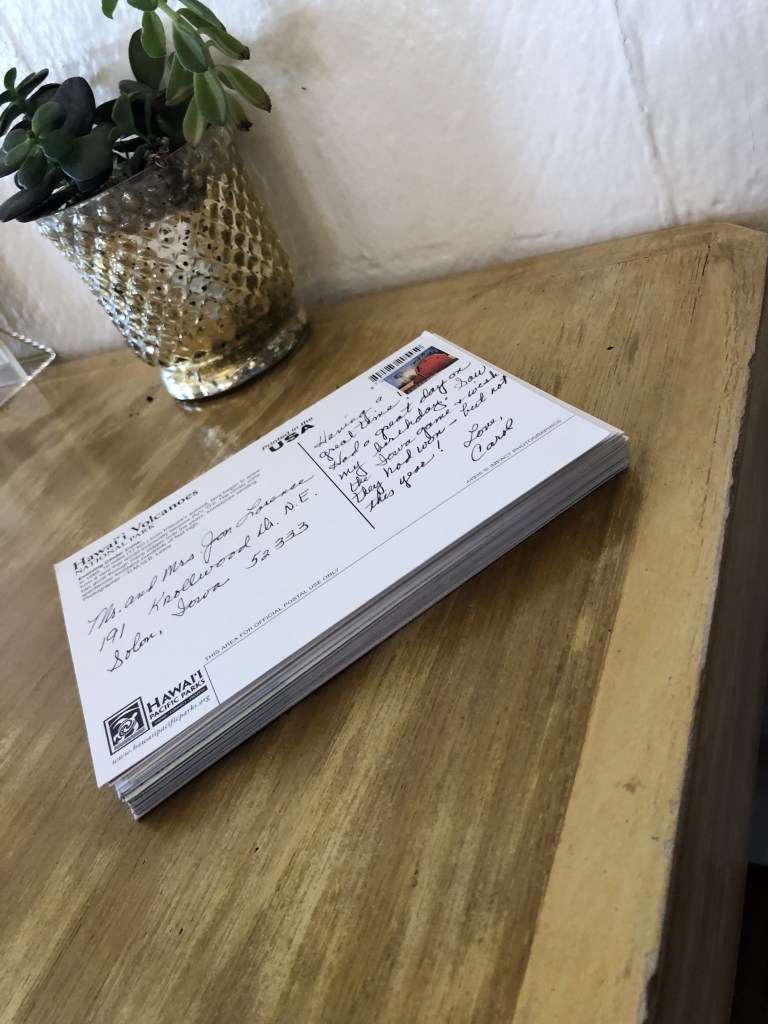
Our next task was to get Carol’s postcards mailed from Hawaii. She needed 8 more cards and had one extra stamp so I sent one postcard and she sent over 30. In order to find a spot for her to write out her cards, we got a table at a lovely restaurant which turned out to be a Maui farm to table – literally. No Diet Coke. They only had ginger and root beer brewed on Maui. For $36 we got fired zucchini and French fries and a ginger. beer. Everyone better enjoy their postcards. It really was nice to feel like we were supporting the local economy.
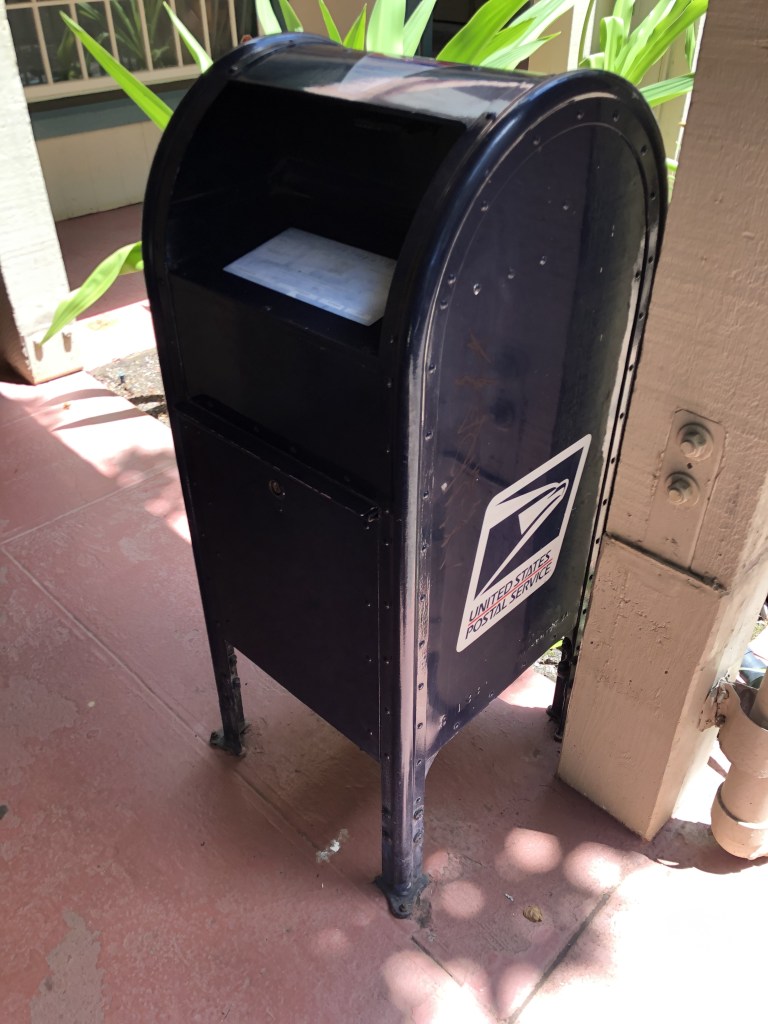
I actually found a real mailbox to mail them in. Just after I took this picture, my phone totally died which made the 30 minutes we waiting on the life boat sitting at the pier agonizing because I had nothing to distract myself like sudoko. Thank goodness we had gotten some food and drink or I would have had a mini meltdown. For reasons that are unclear, another life boat pulled up and let all its passengers off before our very full, warm lifeboat just sat there.
Laundry is in process and then I think we are down to just enjoying the rest of the cruise. No more shore excursions. No potential disasters to happen or at least I hope so.
We had to be up and off the ship by 715 for the Pearl Harbor tour which was early. We did not get back until 1 PM and I was a bit “hangry” by this tie. We spent 3 hours a Pearl Harbor which was. a bit long for most of us and then had a 2 hour bus tour going over the wayward (lush) side of Oahu, and then back to Honolulu to the Punchbowl which is where we intended to have our picnic yesterday. It looked entirely different without the monsoon rain. We then stopped at near the Hawaii 5 O building downtown. We were too hungry to get off at this point.
As we were getting back on the ship, I did a slight trip at the top of the gang plank and I turned around to make sure Carol did not do the same thing. She came across that fine. I turned around and kept going and. then I hear the loud thud and a clang. I turned around and found Carol on the ground. She was using her cane because her knee was hurting a bit and she is not sure what happened but thought perhaps the cane caught on the rug that was down because of the rain overnight. We got her in a wheel chair and out of the way so I could assess if she was injured. Fortunately the only injury was a scrape on her elbow, I think declining energy from lack of food was a part of the problem. After a afternoon nap she was ready to go out again for dinner.
We had dinner at an Irish Pub which has been in downtown Honolulu since the mid 1800s. Great food. We walked by where they had been shooting a scene for Hawaii 5O, Tonight we take off for Maui and we do whale watching on a sail boat in the morning.
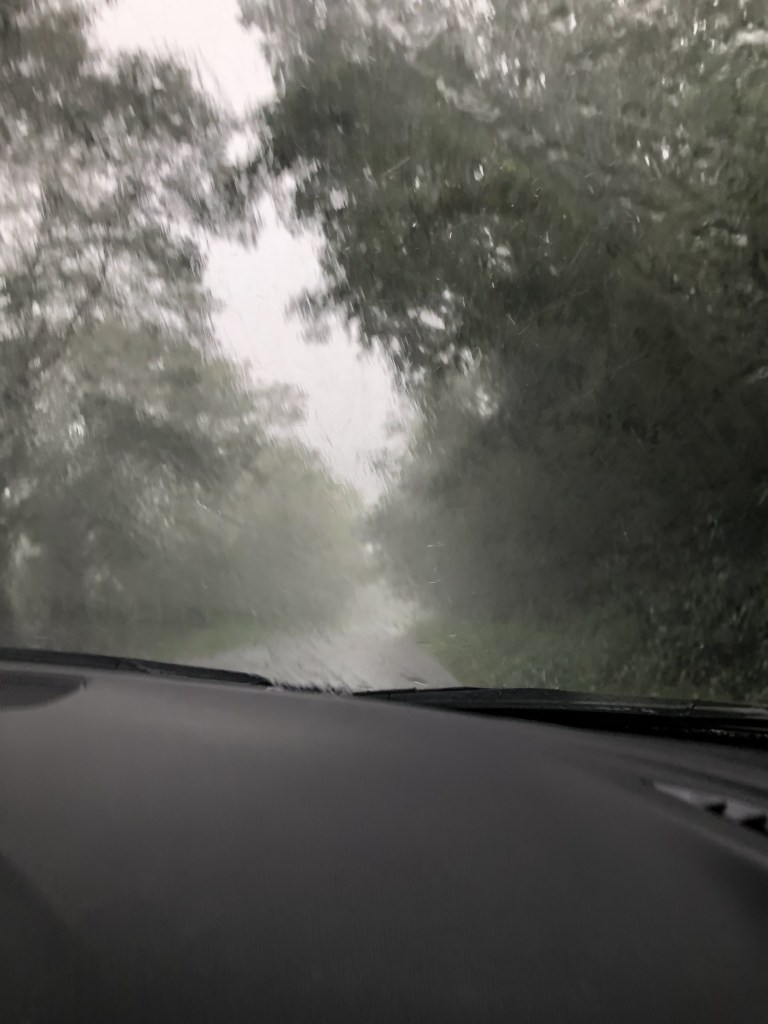
We were able to watch the NCAA Women’s Championship game from a home with a stunning view of Honolulu and the ocean. The Iowa Hawkeyes played a good game but the LSU Tigers were “on fire”. After the game we got some Korean takeout with the intent of going up to the Punchbowl park for a picnic lunch. We knew there was a chance of rain but it had looked overcast all morning. Within a 10 min drive we went from no rain to monsoon like rain to a degree that made driving visibility challenging. Terry knew the route up the mountain well as she used to live up there in college. After we got to the top, we turned around and came back to her condo and ate our lunch. As she had indoor parking we did not need to get soaked. The storm lasted an hour. The temperature dropped and it was windy. It is raining again now.
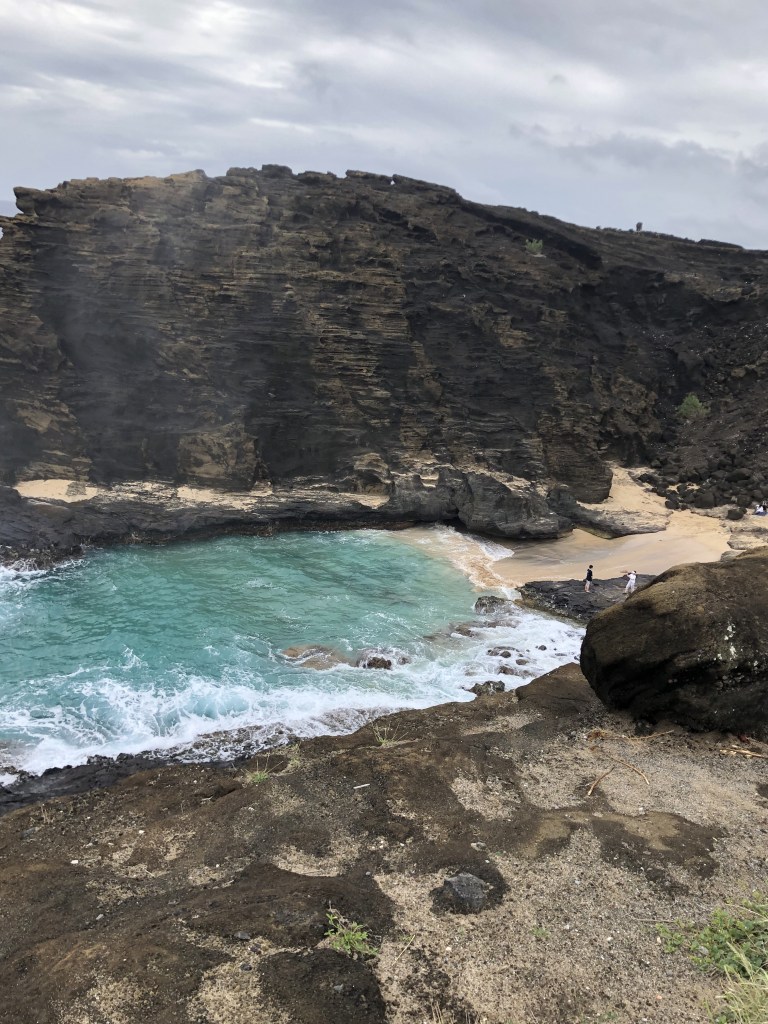
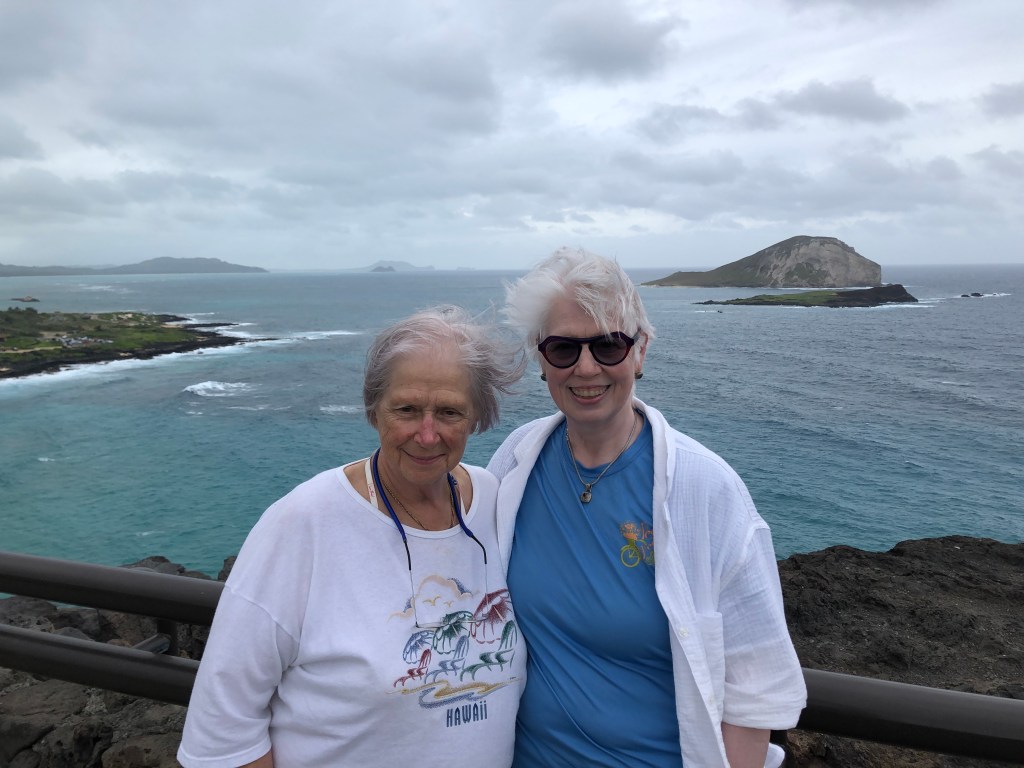
The Luau was cancelled so we had more time to drive around outside of Honolulu – we drove east and north following the coast and then cut across the mountains back to Honolulu. We saw some whales in the distance at one of our scenic stops. We are near the end of the season but hopefully there will be some slow pokes when we go whale watching on Tuesday. We stopped at a drug store to get something I was missing as well as some bottles of water for our room and a few postcards.
Terry was a gracious hostess for the day and we look forward to joining her for dinner tomorrow evening with a friend of hers for dinner before we leave Honolulu. Tomorrow we are up and out early for the Pearl Harbor tour.
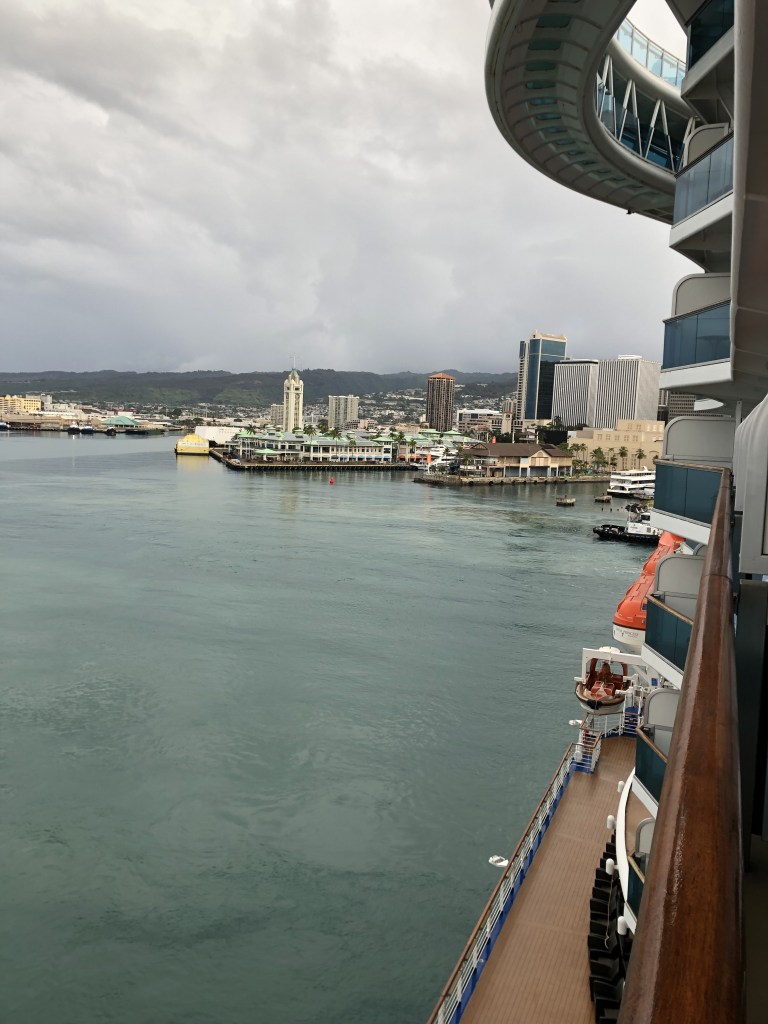
We have docked in Honolulu. My former colleague from NIDDK, Terry, who lives in Honolulu is going to pick us up and take us to her house so we can watch the Iowa play in the NCAA Women’s Basketball finals. I was able to reschedule the Pearl Harbor Tour for tomorrow instead. After the game we will do a driving tour of the island and then get dropped off at the Paradise Cove Luau at 5 PM. Terry has graciously offered to transport us back to ship after the Luau. We will meet up with her again tomorrow evening for dinner at one of her favorite restaurants. Go HAWKS!!
Aunt Carol was the Iowa coaches first grade teacher in Marion Iowa so this is extra special for her.